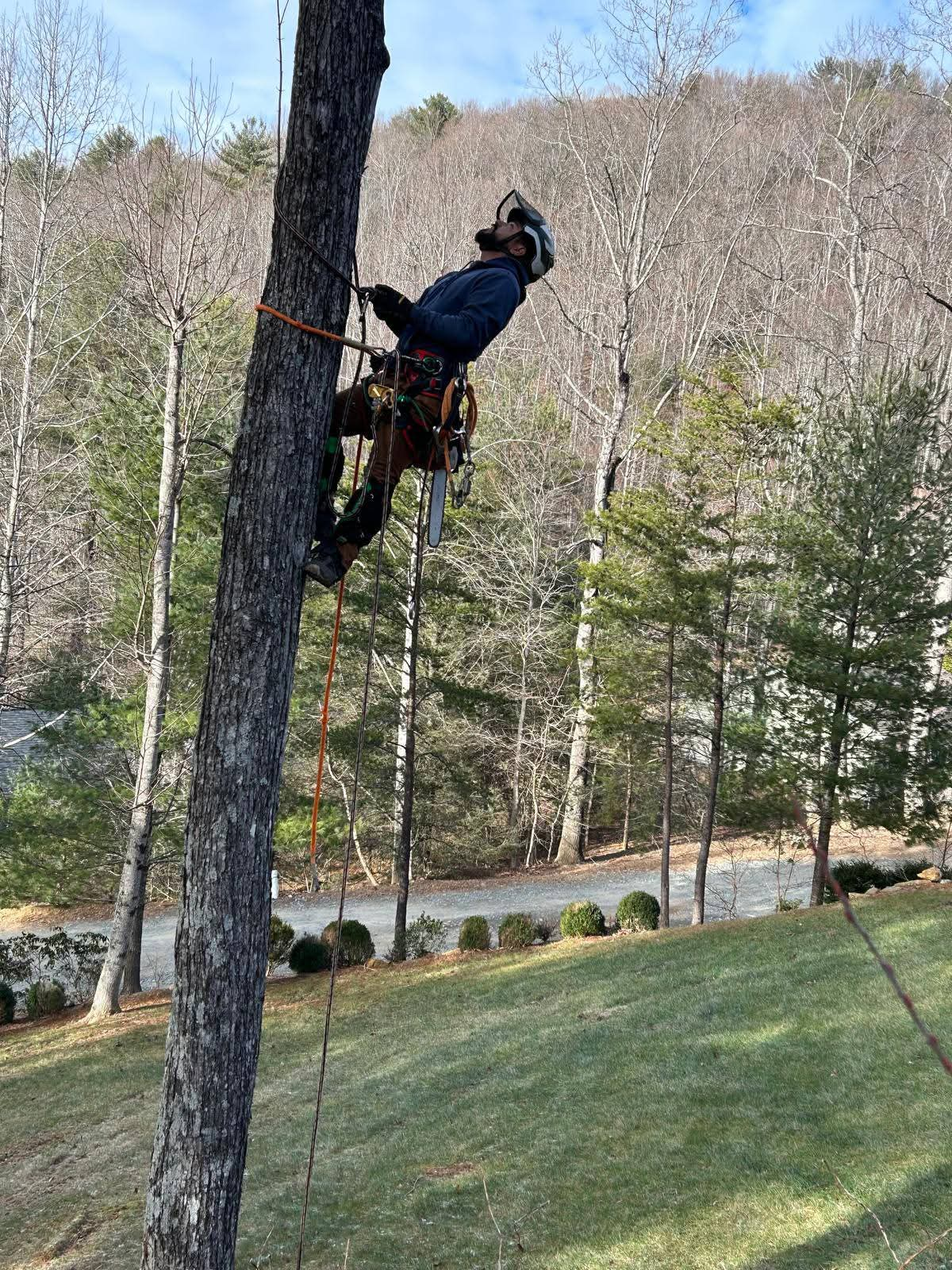
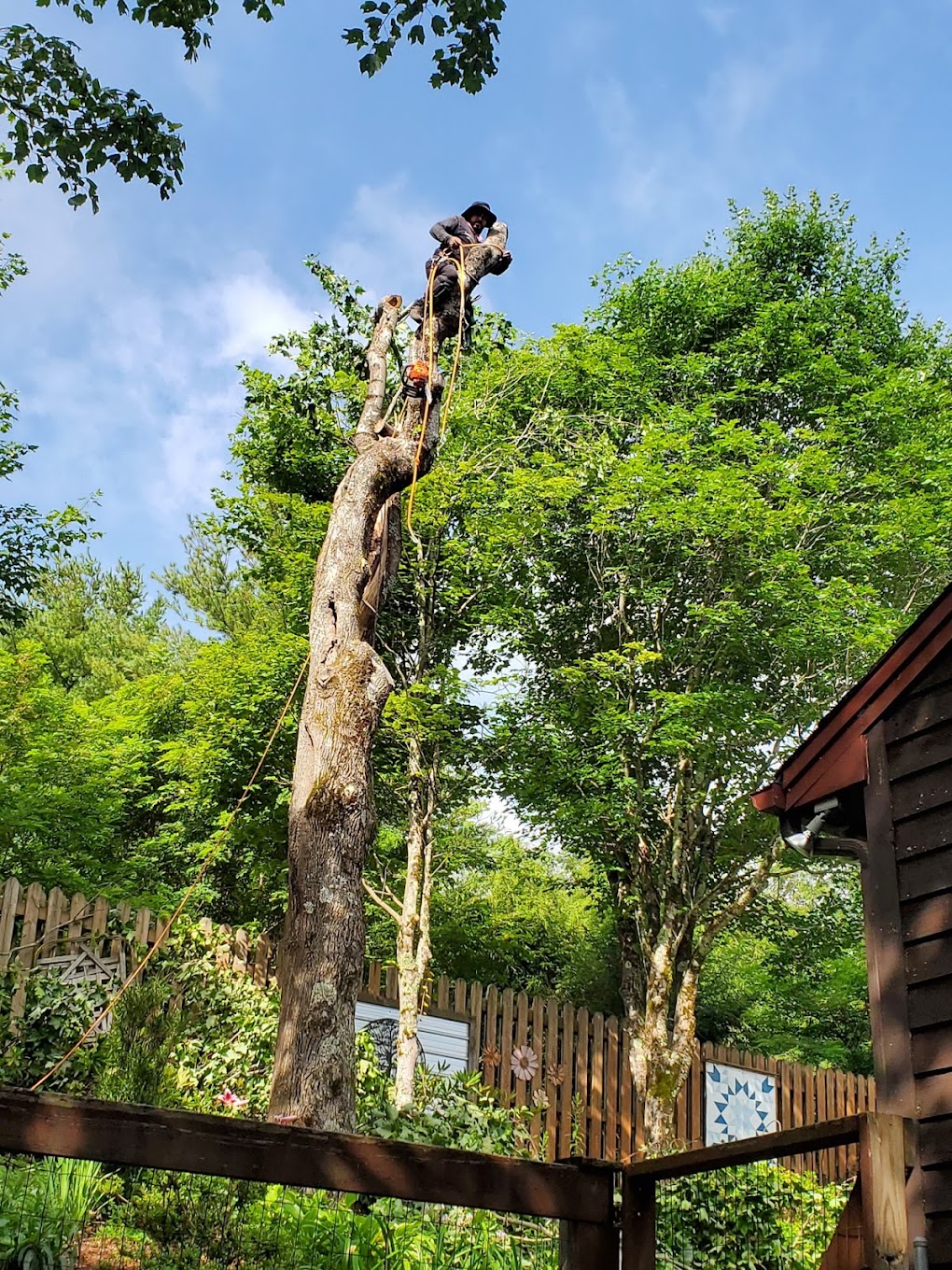
River Birch Tree Service · High Country, NC
Ice Storm Damaged Your Trees? What High Country Homeowners Should Do First
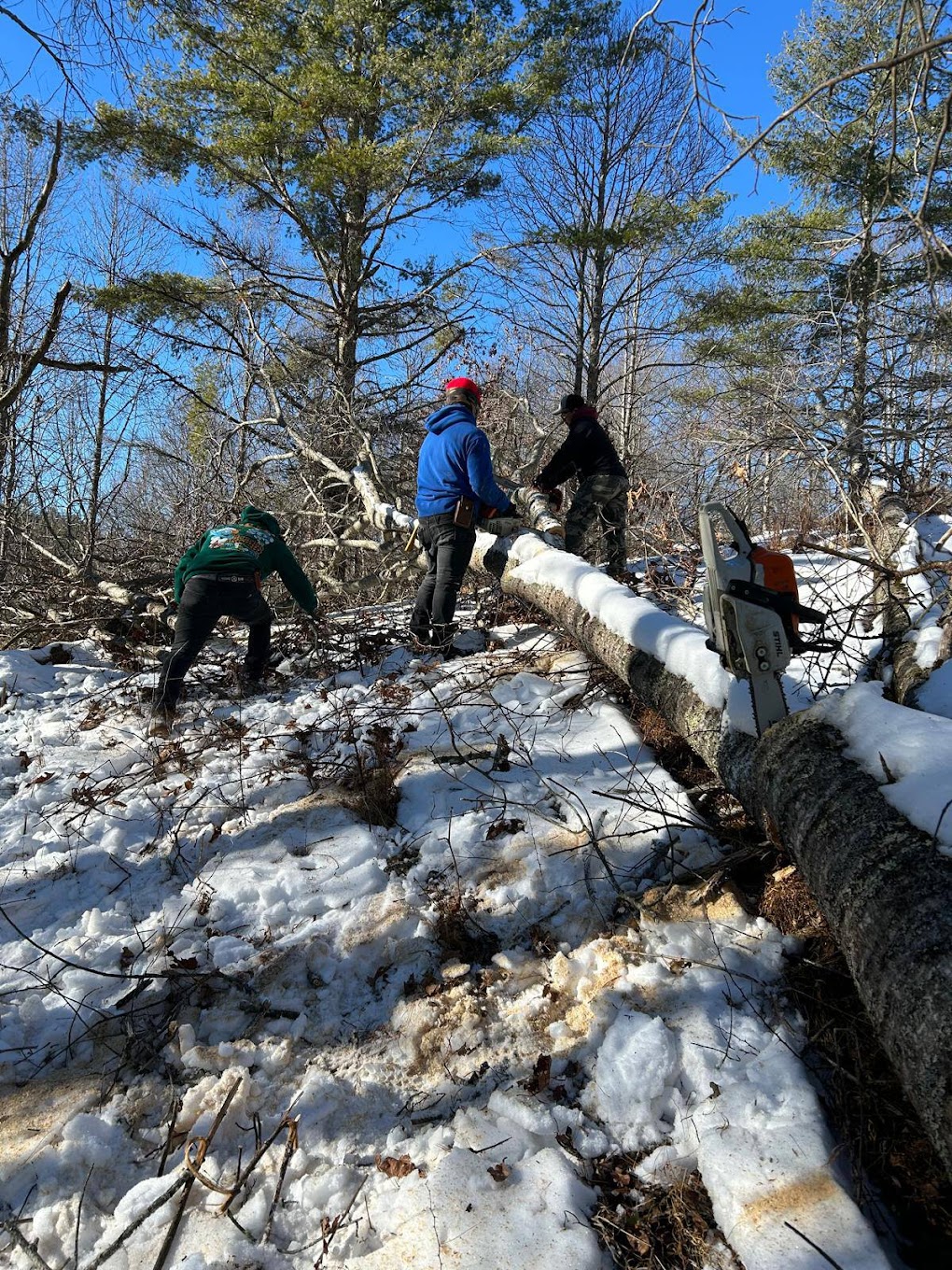
If you live up in the High Country, ice storms are not a matter of if. They are a matter of when. A quarter inch of ice adds hundreds of pounds to a canopy, and our steep lots and tall white pines take the worst of it. After every big ice event, my phone lights up. Here is what I tell every caller, in the order that matters.
In the first 48 hours after an ice storm: stay away from hanging limbs and leaning trees, photograph everything before any cleanup for your insurance claim, and call a pro for anything on a structure, blocking access, or near a power line. Do not cut limbs under tension yourself. That is how people get hurt.
First: do not touch anything dangerous
Ice-loaded limbs snap without warning, and a half-fallen tree is a loaded spring. The two things that hurt homeowners after storms are hanging limbs and trunks bent under tension. If a limb is caught up in the canopy above you, or a trunk is leaning hard against another tree, stay out from under it. No tree is worth an injury. That is what crews with the right rigging are for.
If a tree or limb is on a power line, that is the power company’s job, not a tree service’s. Call your provider and keep everyone clear until they say otherwise.
Second: document everything before cleanup
Before anyone touches anything, walk the property and photograph it all. Wide shots showing where the tree stood. Close-ups of the damage to structures. The broken limbs, the root plate if it uprooted. Your insurance adjuster was not here for the storm. Your photos are the claim. Five minutes with your phone is the difference between a smooth claim and a fight.
Third: triage. What needs a crew now, and what can wait
Call now for a tree on your house, garage, or deck. For anything blocking your driveway or the road. For limbs tangled with the service lines to your house. For a tree leaning hard toward a structure that could go in the next wind.
Can wait a few days: limbs down in the yard away from structures, cosmetic canopy damage on otherwise healthy trees, brush piles that are not blocking anything.
We prioritize storm and ice damage calls during operating hours. The scene gets made safe first, then the tree comes off the structure in sections, then debris gets hauled. Monday through Saturday, 7 AM to 7 PM.
Can the tree be saved?
Not every ice-damaged tree is a removal. Here is my honest triage:
- Probably savable: clean limb breaks on a healthy tree, less than a third of the canopy lost. Proper pruning cuts at the branch collar, and the tree seals the wound itself.
- Maybe: bark torn but the trunk intact, up to half the canopy gone. Worth a professional look. Species and structure decide it.
- Likely a removal: split trunk, bark stripped down one side, more than half the canopy gone, root plate lifted, or a lean that was not there before the storm.
| What you see | What it usually means | What to do |
|---|---|---|
| Clean broken limbs, tree otherwise healthy | Likely savable | Prune properly, keep an eye on it |
| Bark torn, trunk intact, less than half the canopy lost | Maybe | Get a professional look |
| Split trunk or bark stripped down one side | Likely a removal | Call a crew |
| More than half the canopy gone | Likely a removal | Call a crew |
| Root plate lifted or a new lean | Likely a removal | Stay clear, call a crew |
| Limb or tree on a power line | Utility hazard | Call the power company, not a tree service |
White pines, our most common storm casualty, are brittle-topped and do not recover well from major crown loss. Oaks handle it better. Hemlocks already stressed by woolly adelgid often do not bounce back. I would rather tell you a tree can be saved with pruning than sell you a removal. A quick look is all it takes, and estimates are free.
What about insurance?
The short version: insurance usually covers the damage the tree caused to your house, garage, fence, or deck, minus your deductible. Most policies also include some debris removal coverage, often capped around $500 to $1,000 total. What they generally will not cover is removing a tree that fell in the yard without damaging anything. That one is on the homeowner. Every policy is different, so read yours. But those photos you took in step two are what make the claim work either way.
If the tree has to come off, here is what drives the cost of a removal in the Boone area, so you know what to expect.
Preventing the next one
You cannot ice-proof a forest, but you can tilt the odds:
- Deadwood pruning before winter removes the limbs most likely to fail under ice load.
- Thinning dense pine crowns lets wind and ice shed instead of pile up.
- Remove the obvious hazards before storm season, not after. The dead ash. The leaning pine over the driveway.
- Plant smart. Native species suited to your elevation handle High Country weather better than ornamentals picked for looks.
Late fall is the right time for this work, before the ice arrives. One visit can take the worst risks off the board.