
River Birch Tree Service · High Country, NC
How Much Does Tree Removal Cost in Boone, NC?
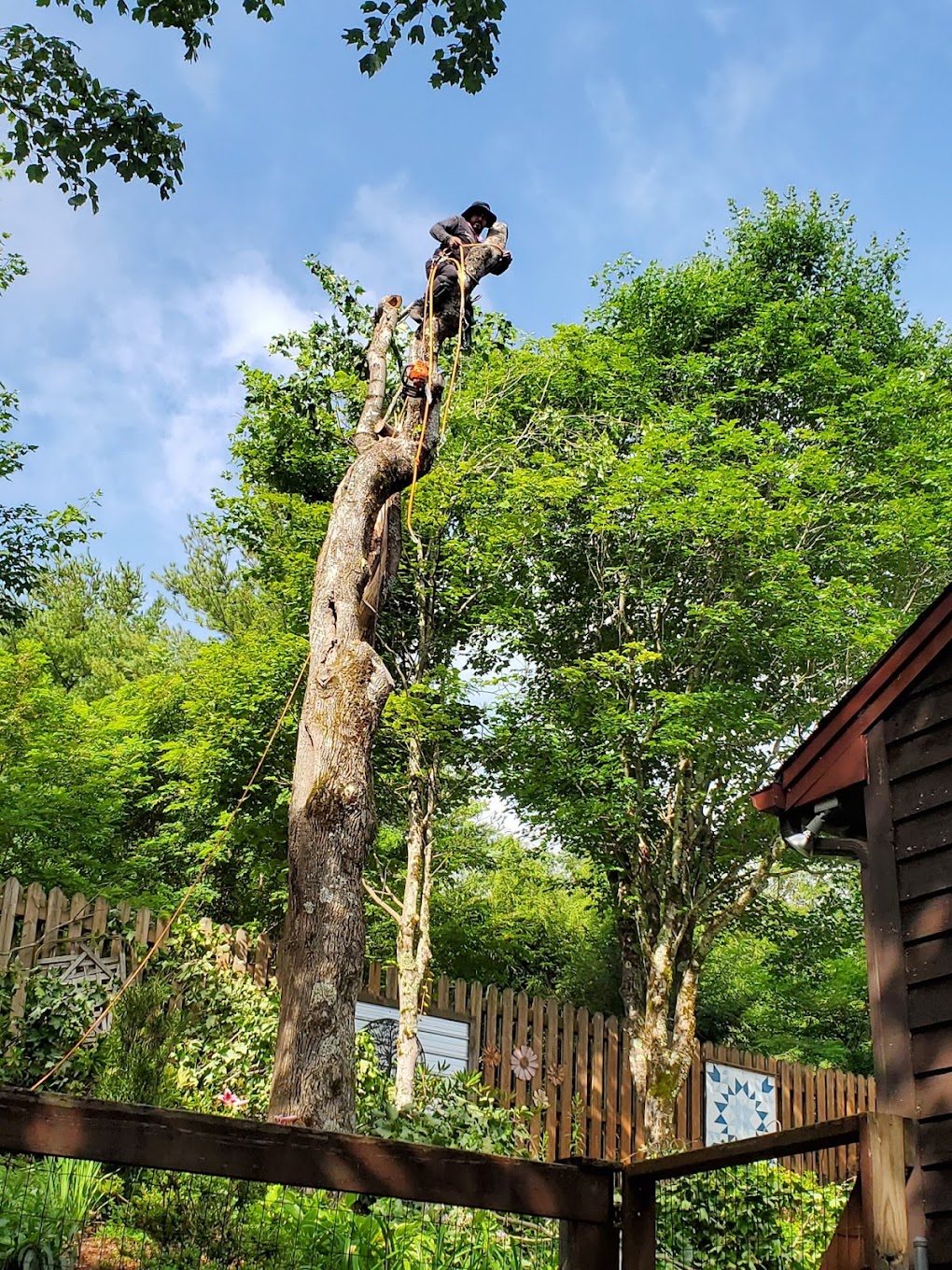
The first question on nearly every call I get is the same: “What will this cost me?” Fair question, and you deserve a straight answer. Here is the honest version from someone who prices tree work in the High Country every week. Nobody can give you a real number without seeing the tree. But I can show you exactly what sets the price, so you can look at your own tree and know roughly where it lands.
Most single-tree removals around Boone, Blowing Rock, and Banner Elk land roughly between $500 and $2,500. Small trees with easy access run less. Big trees close to a house, the kind that have to come down in roped sections, run more. The only number that counts is a written on-site estimate, which is why ours are free.
Size drives the price more than anything
Height and trunk diameter matter most. A 25-foot ornamental in an open yard in Vilas is a quick job. A 70-foot white pine leaning over a roof in Blowing Rock is a full-crew day with climbing, rigging, and a lot of brush to chip. More wood, more time, more risk. That is the math behind every quote I write.
In the mountains, access matters as much as the tree
This is the part that surprises folks who moved here from flatter country. Two identical trees can be completely different jobs depending on the lot. A pine in an open pasture outside West Jefferson is a simple fell. The same pine on a steep slope in Seven Devils, with no room to get a truck within a hundred yards, has to come down piece by piece. Climbers, ropes, every limb lowered by hand. Steep ground, soft soil after rain, long carries for brush. That is High Country tree work, and it is priced accordingly.
Things that push a quote up:
- The tree hangs over a house, deck, garage, fence, or power line
- No equipment access, so the whole job is done by climbing
- Steep slopes or soft, wet ground where trucks cannot set up
- Tight mountain driveways with no turnaround for the chipper
The short version, all in one place:
| Price factor | Tends to cost less | Tends to cost more |
|---|---|---|
| Tree size | Under 30 ft, thin trunk | Over 60 ft, thick trunk |
| Species | White pine, poplar | Oak, hickory, or any dead tree |
| Access | Open yard, truck gets close | Steep slope, climbing only |
| Position | Away from structures | Over a house, deck, or lines |
| Extras | Removal only | Add stump grinding or haul-off |
| Timing | Scheduled visit | Emergency or storm call |
Species matters here too
Our forests are not like the Piedmont’s. White pines grow tall and fast and are usually the most straightforward removals. Mature red and white oaks have wide, heavy canopies. More wood, more rigging, a bigger job at the same height. And dead trees cost more whatever the species. Dead wood is brittle and hard to predict, which makes the work slower and more dangerous for the crew. If you have a hemlock dying back from woolly adelgid, and there are plenty in Watauga and Ashe Counties, do not wait. It only gets pricier and more hazardous as it declines.
Storm and emergency work is priced differently
A tree on your roof is not a scheduled job. Emergency and storm-damage work runs above normal rates because storm calls jump to the front of the schedule. The crew is often out in bad weather, on trees that are already broken and loaded with tension. We take storm calls Monday through Saturday, 7 AM to 7 PM. One tip: if a storm-damaged tree is on a structure, take photos before anyone touches it. Your insurance company will want them. If an ice storm just hit, here is what to do in the first 48 hours.
Do not forget the stump
Most removal quotes do not include the stump unless you ask. Stump grinding is usually priced by stump diameter, and adding it while we are already on site costs less than a return trip. Ask for it in the same estimate.
How to keep the cost down
Bundle your trees. Three removals in one visit cost less than three separate trips. The crew and equipment are already there.
Do not wait on a dying tree. A declining tree gets pricier to remove every year. Once it is fully dead and brittle, the price goes up with the risk.
Schedule in the slower season. Late fall and winter are quieter, which can mean more flexibility in the schedule.
Get more than one quote. I will say it even though I am one of the quotes. Just make sure everyone bidding is insured. A cheap quote from an uninsured crew is not cheap if something goes wrong on your property. We are fully insured, and our estimates are free, on-site, and in writing.
One more thing worth checking before you schedule anything: whether you need a permit or HOA approval for your address. In town limits and HOA communities, that step comes first.