River Birch Tree Service · High Country, NC
How Much Does Stump Grinding Cost in the High Country?
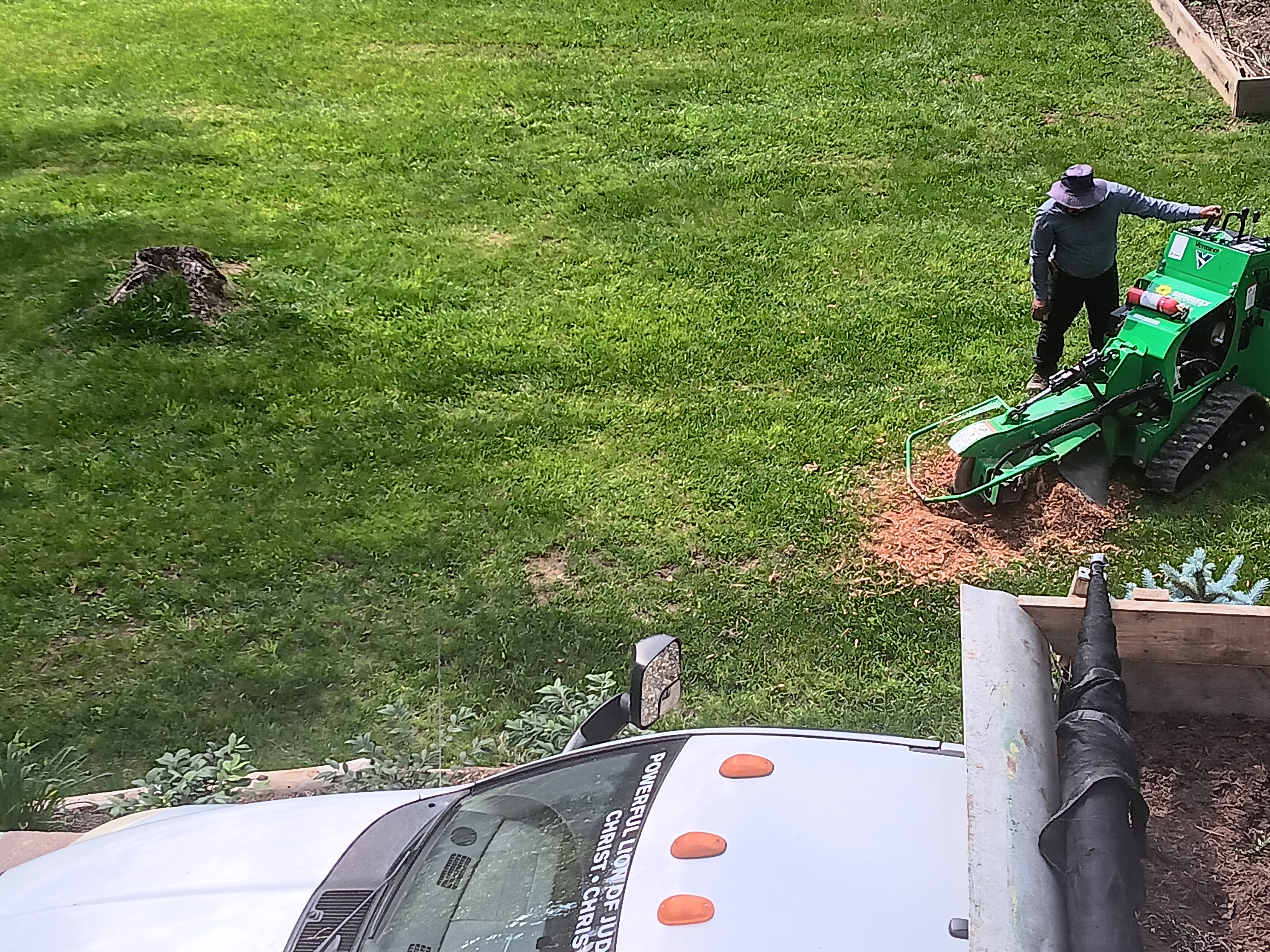
After a tree comes down, the stump is what is left — and it is usually the part nobody budgeted for. Here is the honest version of what stump grinding costs in the High Country, what moves the price up or down, and why the only number that counts is the one from an on-site estimate.
Most single-stump grinding jobs around Boone, Blowing Rock, and Banner Elk land roughly between $100 and $400. Small softwood stumps in an open yard run less. Large oak stumps with roots running across a slope run more. Final price requires an on-site estimate, which is why ours are free.
Diameter sets the price
Stump grinding is priced mainly by size — the diameter of the stump measured at ground level, including the root flare where the trunk meets the soil. A 12-inch pine stump is minutes of work. A 40-inch oak stump is a bigger machine, more passes, and a lot more grindings to deal with. When you call, the first thing we will ask is how wide the stump is — measure across the widest part at ground level, not at the cut, and you will already have a better idea of where your price lands.
Species and roots matter too
Not all wood grinds the same. Pine and poplar grind fast. Oak and hickory are dense and slow the machine down. Old stumps that have started to rot actually grind easier than fresh ones — one of the few times waiting works in your favor on price.
Surface roots add time. On High Country lots, roots run shallow over rock and spread wide on slopes. If the roots are lifting a driveway edge or running through a bed you want level, grinding them out along with the stump is more machine time than the stump alone.
The short version, all in one place:
| Price factor | Tends to cost less | Tends to cost more |
|---|---|---|
| Stump diameter | Under 15 inches | Over 30 inches |
| Species | Pine, poplar, rotted wood | Fresh oak or hickory |
| Roots | Contained root ball | Wide surface roots |
| Access | Open yard, machine drives up | Steep slope, gates, long carry |
| Number of stumps | Several in one visit | Single stump, separate trip |
| Cleanup | Grindings stay as mulch | Haul-off included |
Access: the High Country factor
A stump grinder is heavy equipment. It needs a path to the stump. A stump in an open yard in Vilas is straightforward. A stump behind a mountain cabin in Seven Devils, down a steep bank with no machine access, takes a smaller grinder, more passes, and more crew time — or occasionally an honest conversation about whether grinding is practical there at all. Steep ground, soft soil after rain, fences, and narrow gates all belong in the estimate conversation, and they are exactly why phone quotes on stump work miss so often.
Multiple stumps change the math
The first stump carries the trip: getting the machine to your property and set up. After that, each additional stump in the same visit costs noticeably less than it would on its own. If you have three old stumps scattered around the property, grinding them in one visit is almost always the cheapest way to get them done. The same logic applies when a tree is being removed — adding the stump while the crew is already on site, as we note in our tree removal cost guide, avoids paying for a second trip later.
Grind it, dig it, or leave it?
Grinding is the middle option, and for most homeowners the right one. Leaving a stump means years of waiting for it to rot, plus a tripping hazard and a magnet for carpenter ants and termites close to the house. Digging or pulling a stump out tears a much bigger hole and usually costs more once the hole is filled and the mess hauled off. Grinding takes the stump below ground level in one visit and leaves the roots to break down in place. Our stump grinding service page walks through how the work itself is done.
How to keep the cost down
Bundle stumps in one visit. One trip, one machine setup, several stumps — the per-stump price drops.
Add the stump to a removal estimate. Usually cheaper than a separate return trip.
Clear the path. Moving firewood stacks, planters, and vehicles away from the stump before the crew arrives keeps the job to grinding, not furniture moving.
Measure before you call. Diameter at ground level, plus a phone photo of the stump and the path to it, gets you a much straighter first conversation.